40%
Administrative work instead of underwriting
40% of every underwriting dollar goes to manual administration — not to risk selection or pricing.
Source McKinsey, 2022
🚛 Join our Live Roundtable for Transportation Brokers🚛 Transportation Brokers Live Roundtable
Register NowComplete files. Clear decisions. The judgment they trained for —
applied to the risk, not the paperwork. And for the CXO watching
the book, the hit ratio and loss ratio to prove it.
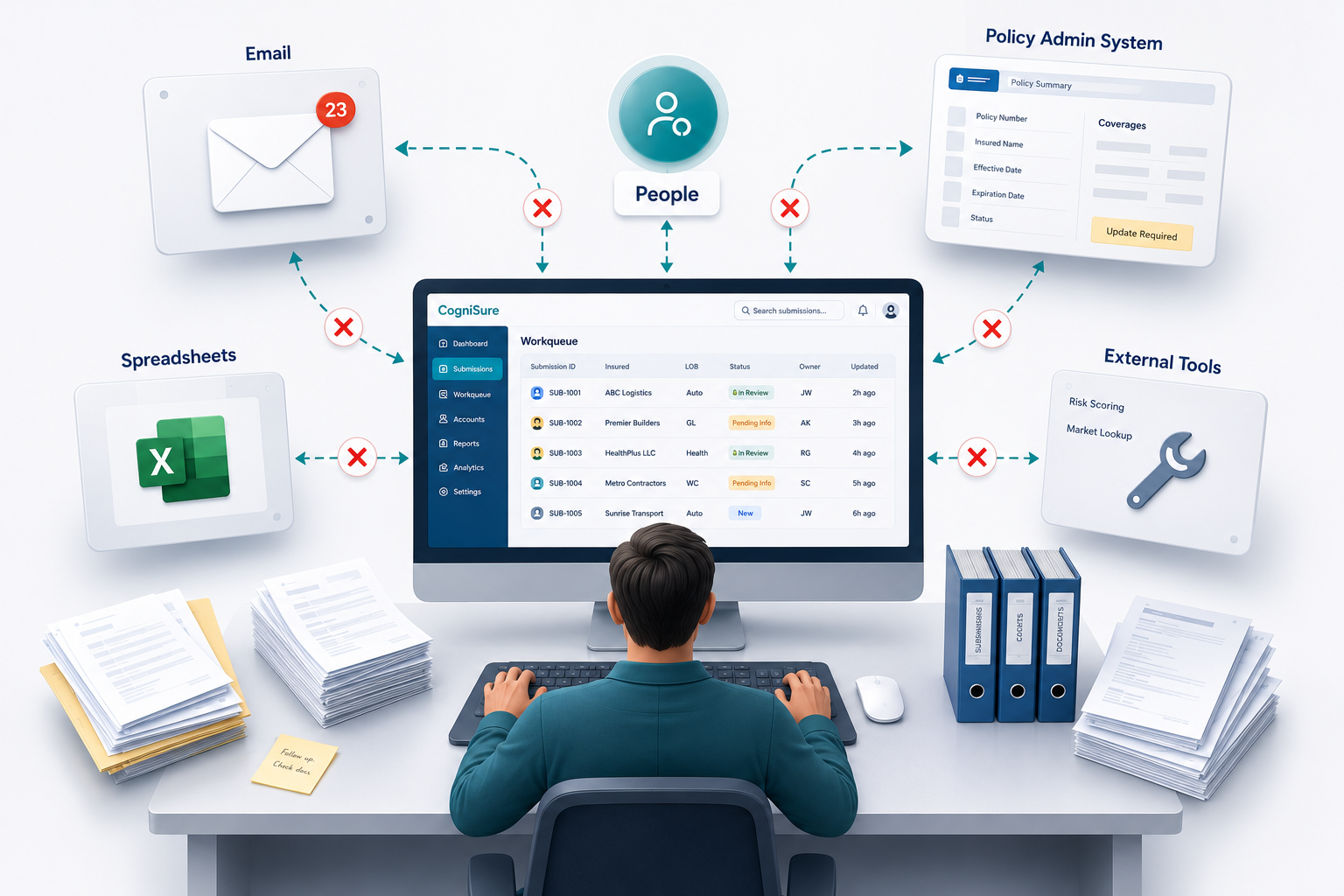
Fragmented systems and incomplete information slow every underwriting decision.
40% of every underwriting dollar goes to manual administration — not to risk selection or pricing.
78% of brokers place their best business with the first quality quote. Not price. Not coverage.
Underwriters jump between emails, policy admin systems, spreadsheets and external tools — wasting valuable decision time.
Result: Slower cycle times and missed opportunities.
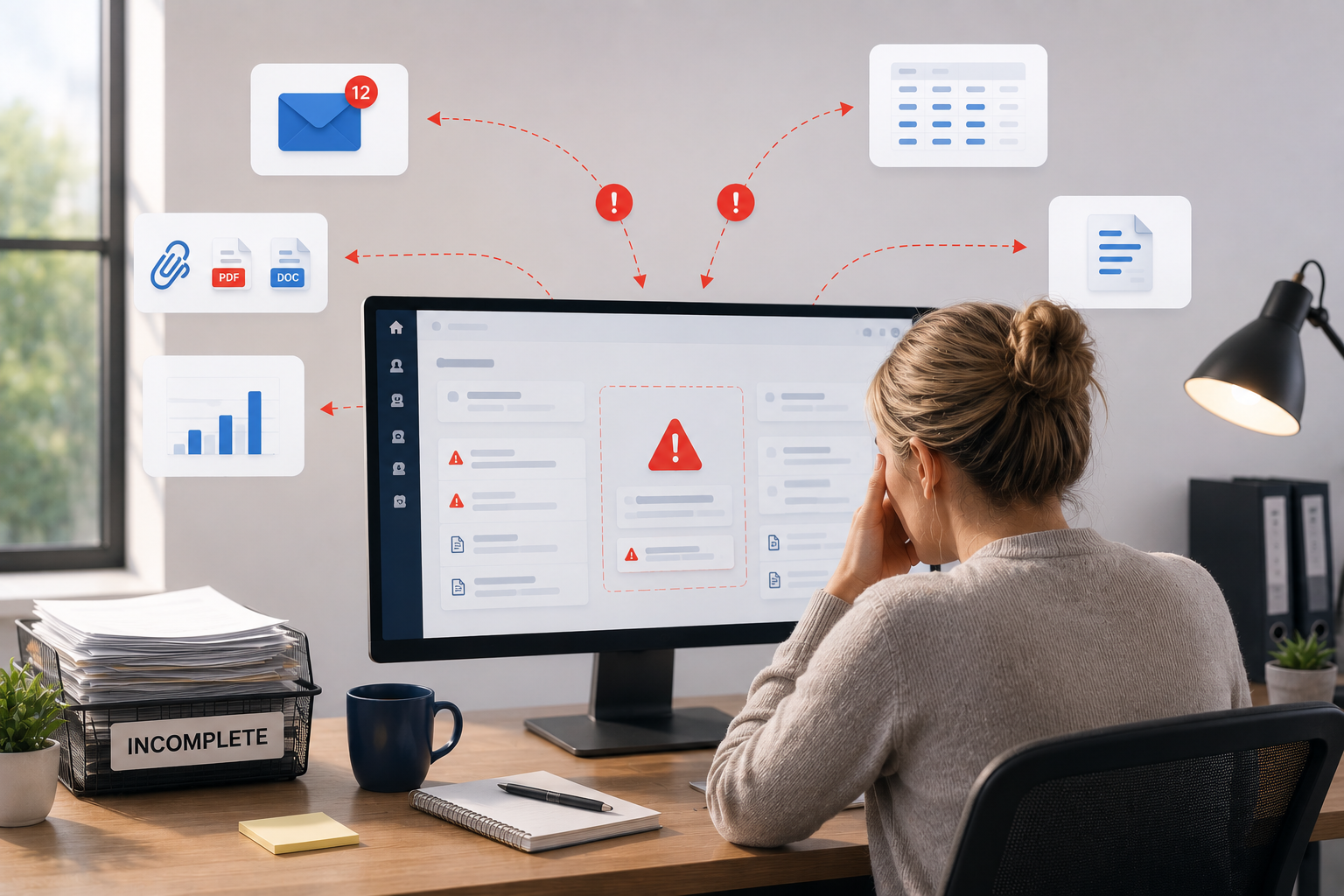
The ACORD is missing pages. The loss runs are unreadable. The vehicle schedule doesn’t match the fleet count. By the time the file is complete enough to underwrite, the broker has already bound it elsewhere.
Result: Lost opportunities before underwriting even begins.
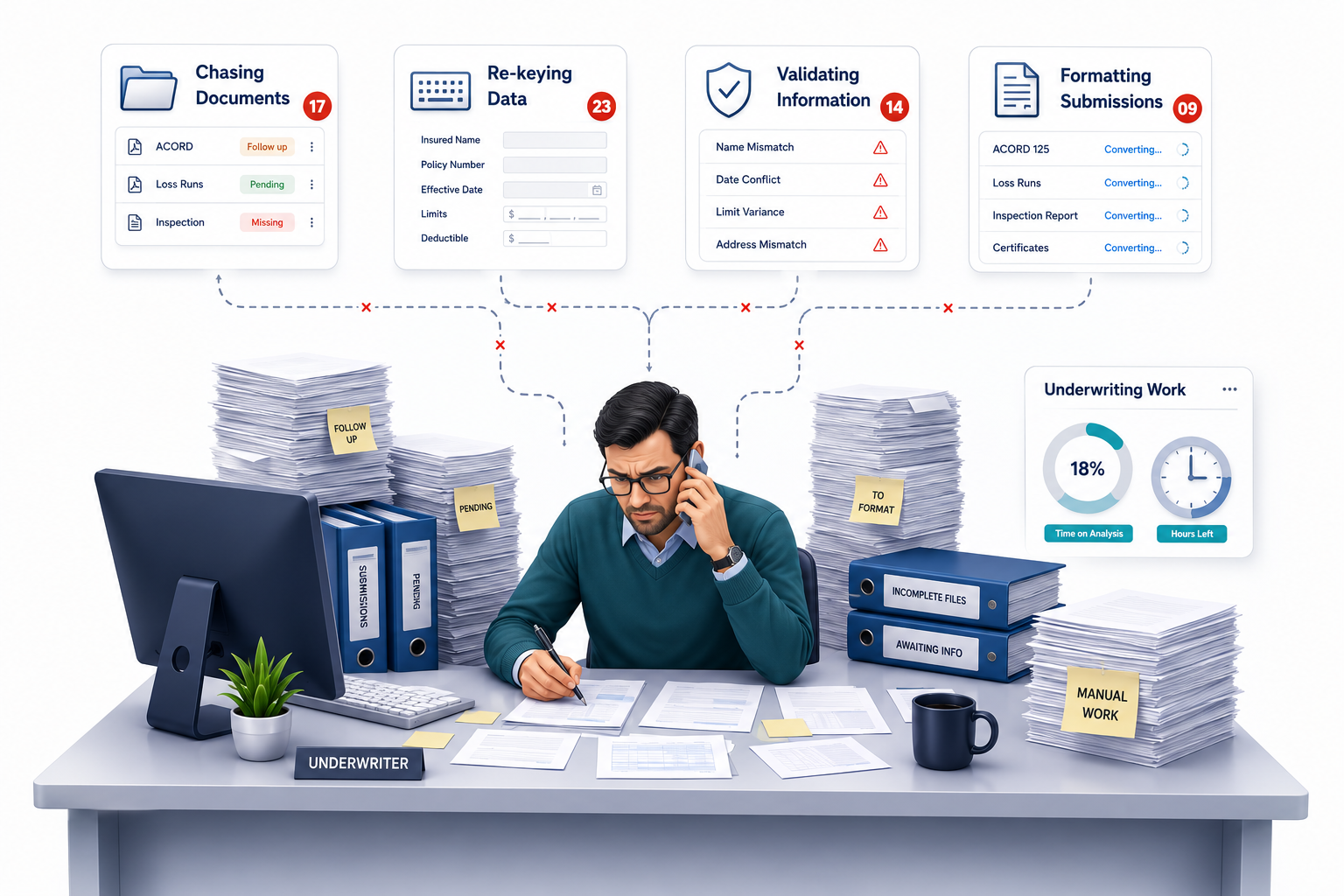
Your most expensive hire spends most of their day chasing documents, not underwriting them. Senior judgment — the thing you actually pay for — held hostage to data collection.
Result: High cost, low impact. Less time for what moves the needle.
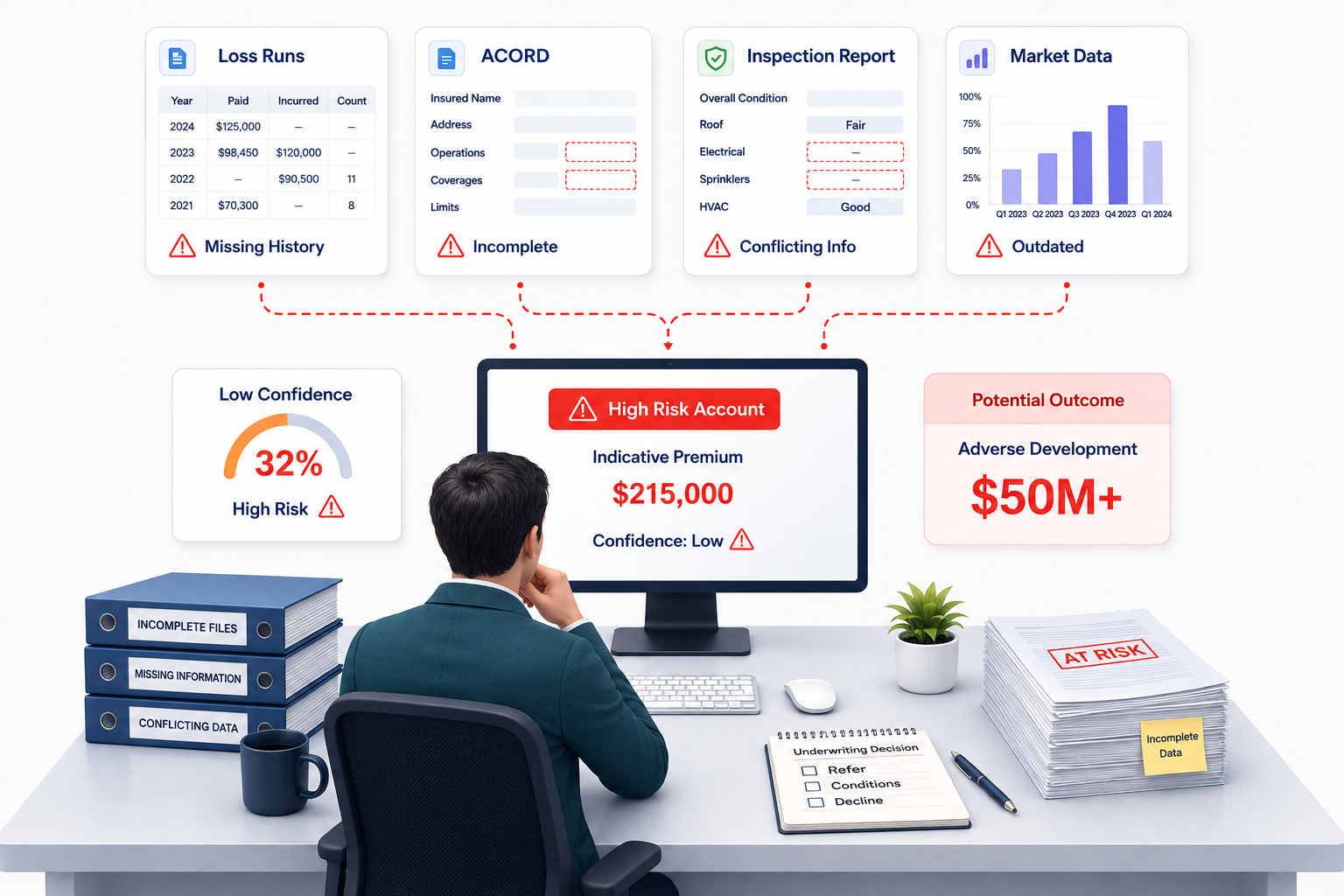
Less time per file. Incomplete data. Pressure to move. That’s how bad underwriting decisions happen — and how a single account can cost a carrier $50M in adverse development.
Result: Poor decisions. Expensive consequences.
Submissions read. Data extracted. Third-party sources pulled. Clearance run. Appetite matched. Brokers chased. The underwriter opens to a prioritised queue and a complete file.
Active accounts ranked by profitability. KPIs and SLA tracking on day one. Recent activity, headlines, and exposure trends — for the line you're actually writing.
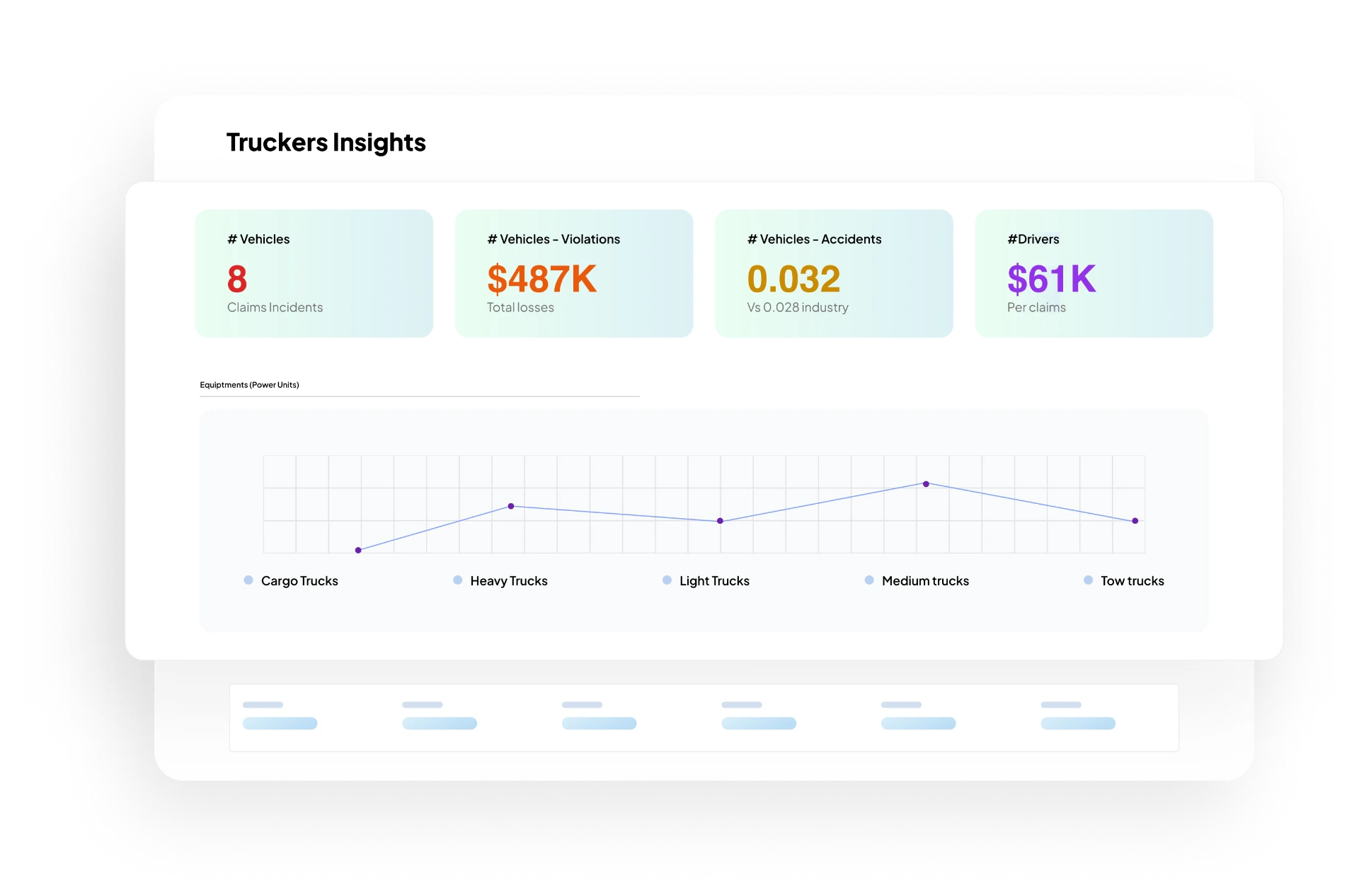
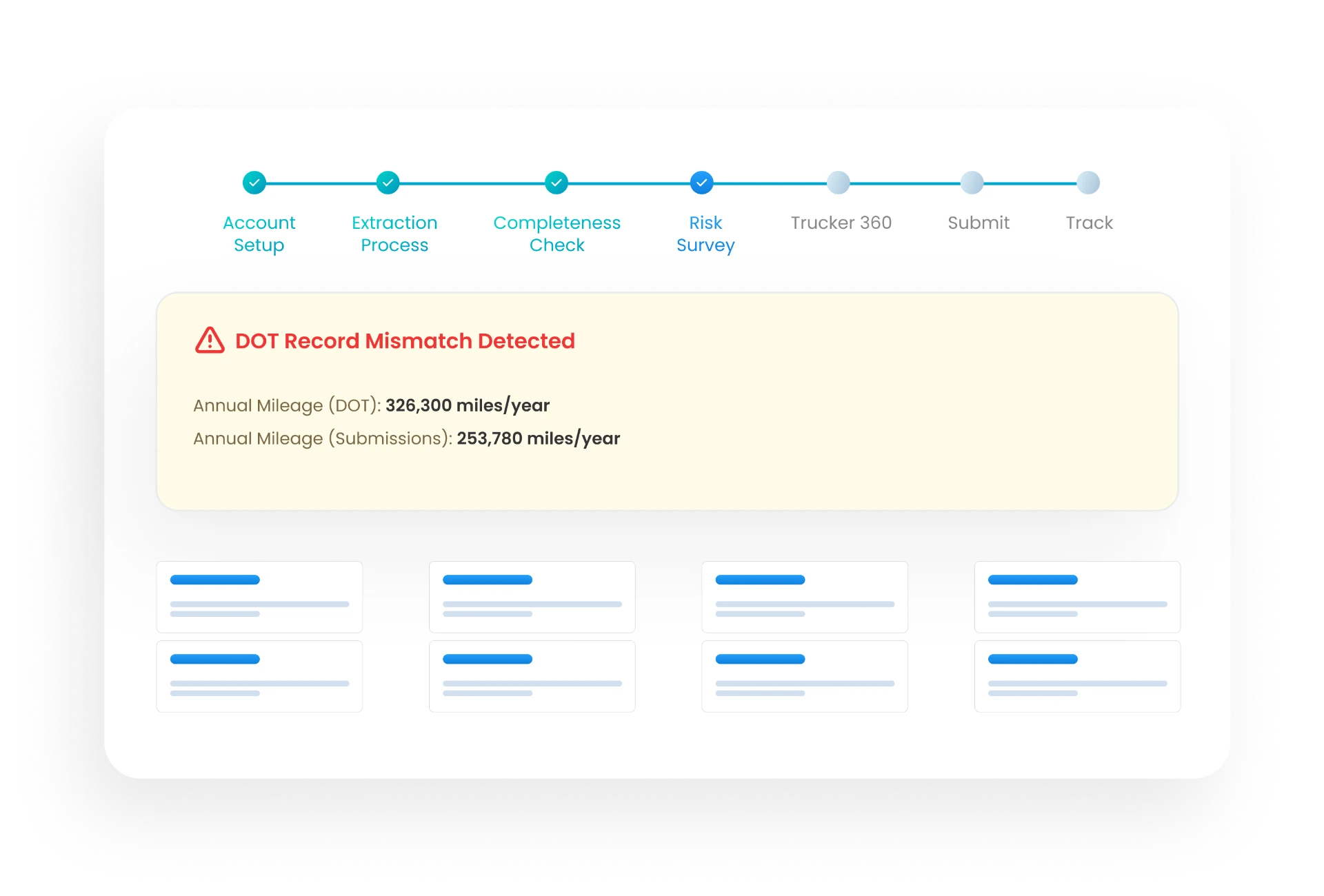
The real value isn't a clean file — it's the discrepancy caught before you quote. A DOT mileage that doesn't match the application. A missing loss year. An exposure the submission understated. Flagged, with the action item, before the underwriter spends a minute.
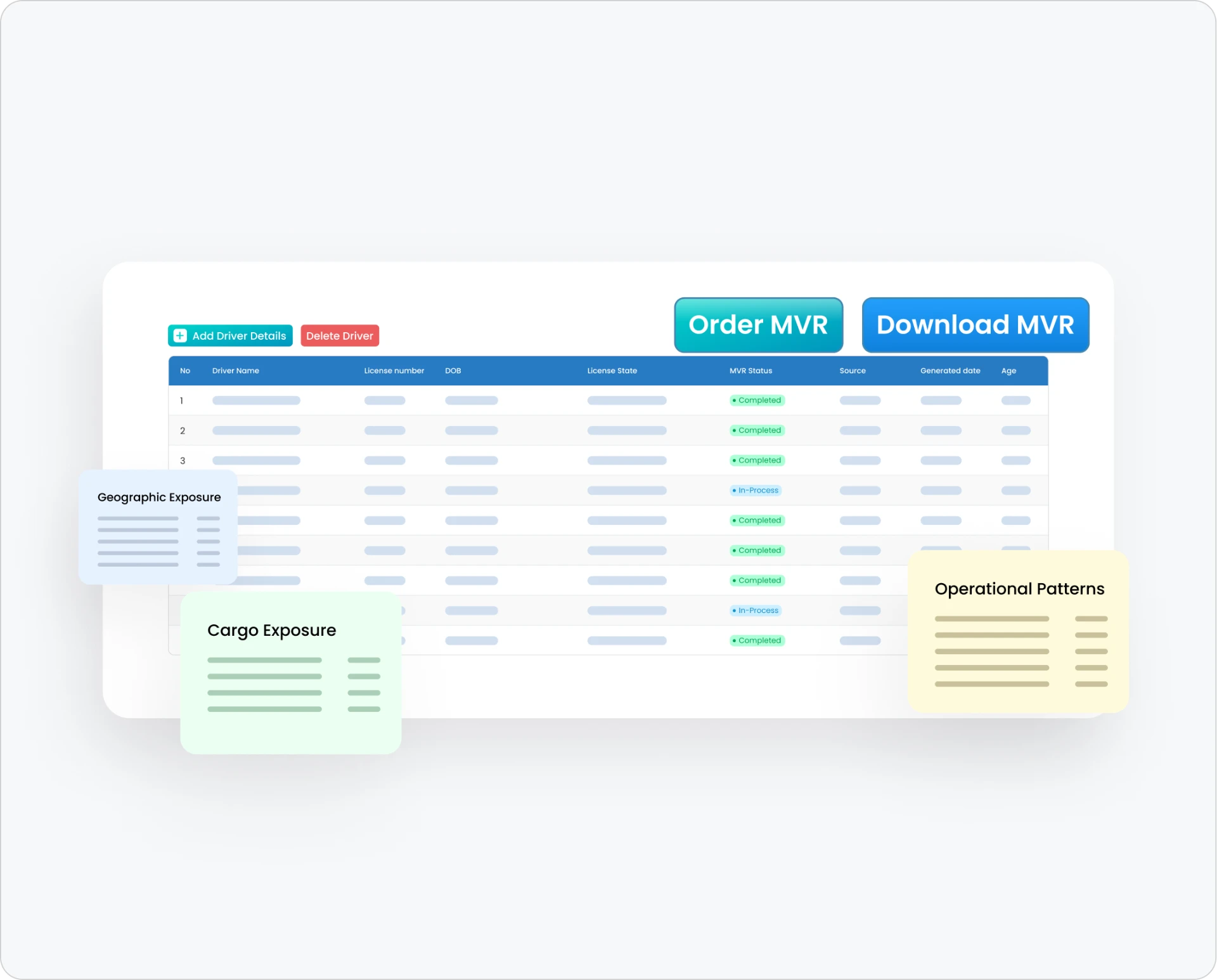
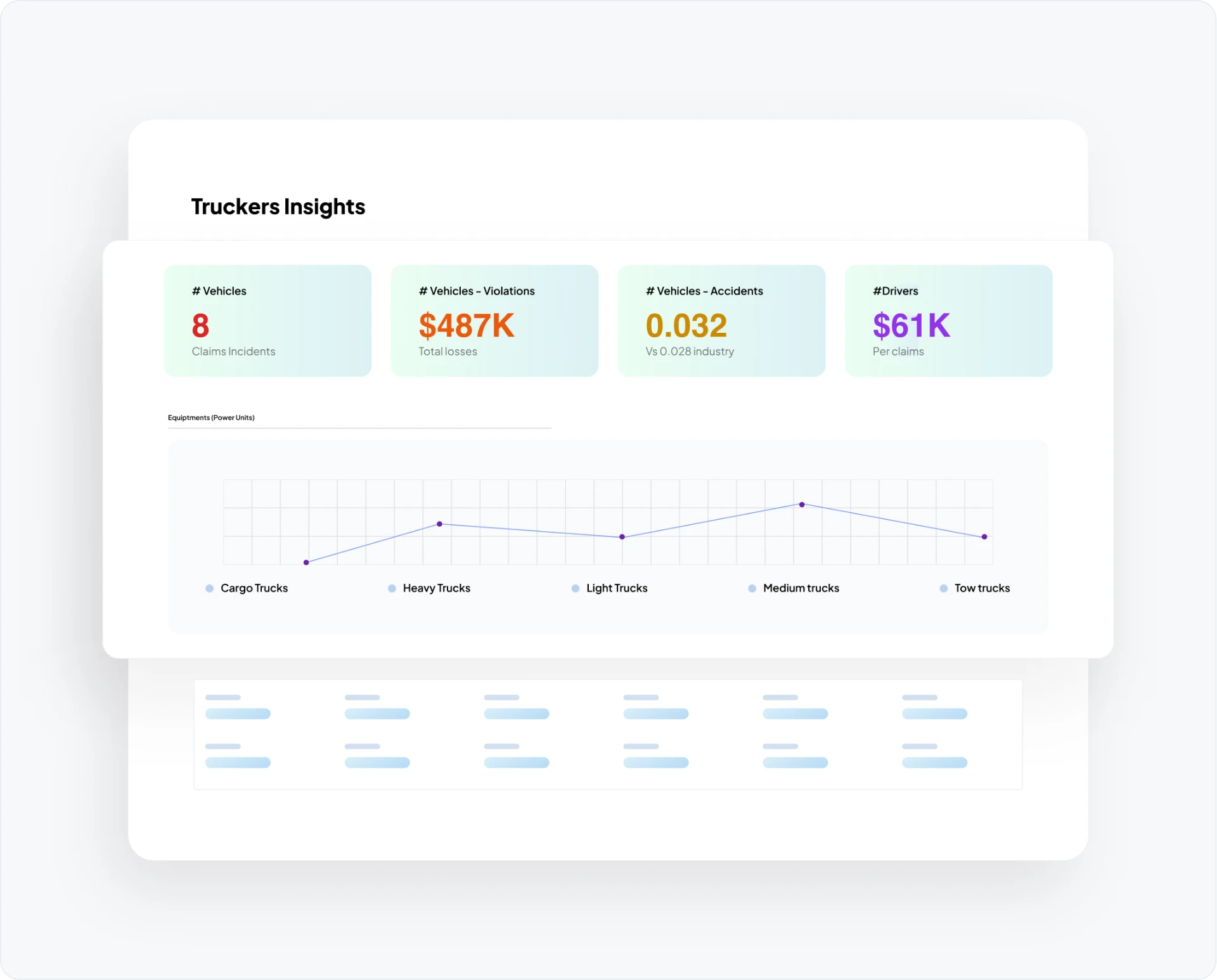
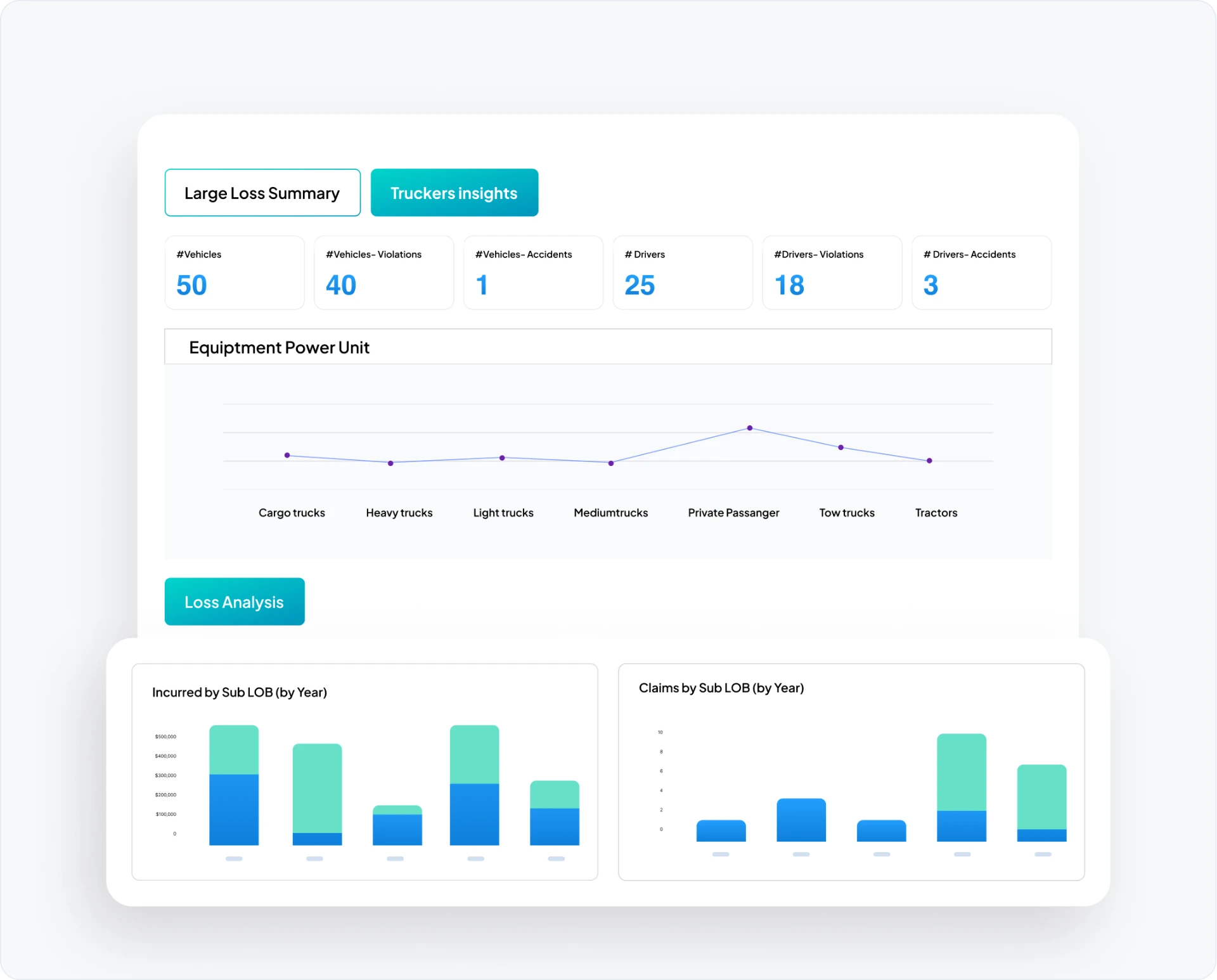
Loss runs from every prior carrier — read, normalised, trended by year and line. Claims frequency, severity, open reserves, large loss detail — assembled before the underwriter opens the file.
Vehicles, violations, accidents, drivers — counted, costed, and charted by equipment type. The pattern that decides the price.
Coverage lines, limits, package structure — designed against the account's actual exposure, not a generic template.
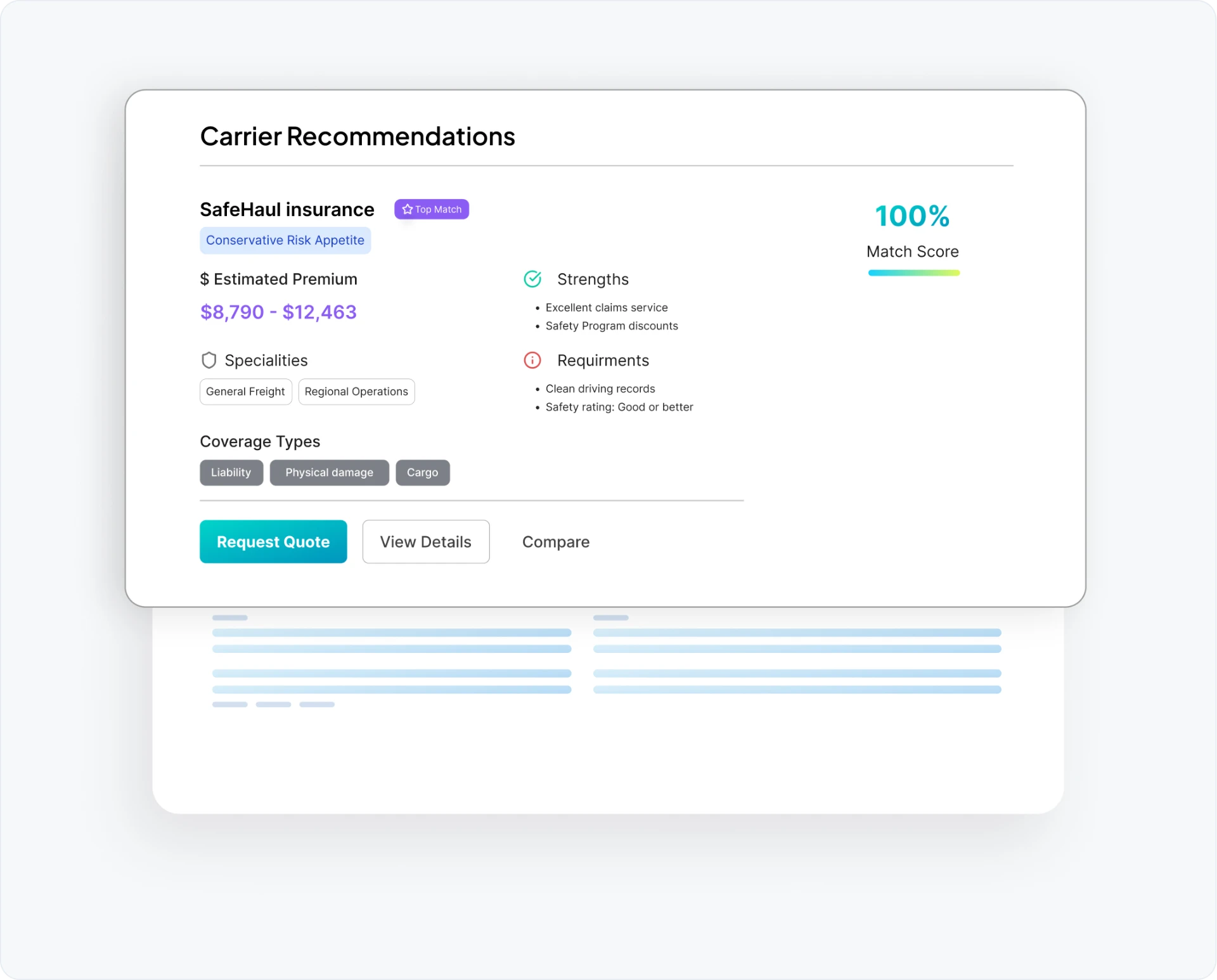
Match score, estimated premium, strengths and requirements — assessed against appetite before a minute is spent underwriting.
Hit ratio up 18 points. Loss ratio down 5. For a carrier writing $1B GWP — that combination is worth $10–20M annually.
Not probabilistic. Not best-effort. Every output traceable, every decision defensible, every result repeatable — because the foundation was built that way.
Every action is logged. Every decision is explainable. Every audit is effortless.
Appetite, clearance and triage logic configured to your division — without engineering tickets.
Normalised, enriched and source-tracked — every field carries its provenance and confidence.
Purpose-built algorithms read every submission artefact — however messy the source.

The underwriting intelligence running across the entire workbench — not a chat window bolted to a dashboard. Every answer grounded in the actual account: the documents, the data, the rules. It doesn't guess. It cites.
Every document read, structured, and validated. Before a human touches the file.
The right submission reaches the right underwriter; cleared, scored, ready to price.
Analyse intelligently. Turn a bound decision into action, with no manual handoff.
Integrate seamlessly with every policy admin system.
Peco works a live submission, task by task — while the underwriter asks in plain English and gets answers from the account: grounded, source-cited, defensible.
Each line carries its own data model, completeness rules, exposure logic, and enrichment sources. Not a one-size template stretched across verticals — a purpose-built model for every line you write.
Reads MVR batches, IFTA reports, loss runs, and unit schedules together — then scores driver risk, radius, and loss frequency the way a trucking desk actually thinks.
The carriers who move now won't just be faster. They'll be more accurate, more profitable, and harder to compete against. Don't miss the siren call of AI.